


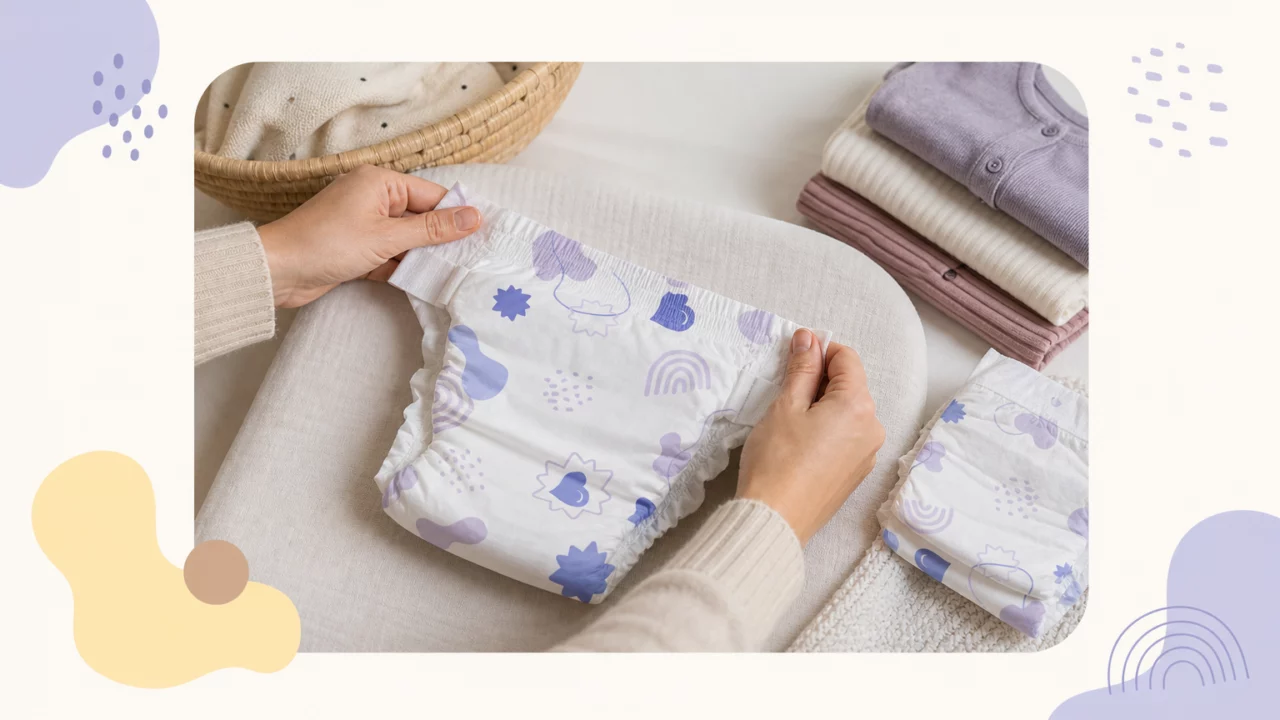
6 min read
During diapering, you may notice that the diaper feels tighter or leaks more often. These changes may mean your baby needs a different diaper size. Here’s how to check the fit and why weight alone doesn’t set a firm rule for when to switch.
- Marks or a tight fit may be signs that a diaper is too small.
- Frequent leaks may be related to fit, but they can have other possible causes too.
- Check the fit and freedom of movement on your baby instead of relying on weight alone.
- Size ranges can help you choose, but they aren’t strict cutoffs.
When should you change diaper sizes?
Switching sizes may make sense if the diaper repeatedly feels tight, leaves noticeable marks, or leaks often despite careful application. What matters is how it fits your baby’s body. One sign alone isn’t always enough to determine the right size.
Babies grow at different rates, and body shape and motor development can also affect fit. A diaper that feels comfortable on one baby may feel tight around the belly or legs on a baby of a similar weight. Check the fit over several diaper changes.
What are signs that a diaper is too small?
When you remove the diaper, look at your baby’s skin, then check how easily the new diaper fastens. Signs often include a tight fit around the waist and leg openings, or an absorbent core that no longer covers the diaper area well.
Marks and a tight fit
Light marks can appear after wearing a diaper. If they remain clearly visible or the waistband and leg openings feel tight, the diaper may be too snug. Also check whether the fasteners close comfortably and whether the waistband digs into the skin.
Check both leg openings. The cuffs should sit against the skin without pressing into it. A tight fit can limit movement, for example when your baby pulls their legs up or moves around a lot.
Leaks despite careful application
If your baby’s clothes get wet repeatedly, the diaper may be too small to cover the area adequately. Leaks can have other possible causes too: the diaper may have shifted, the leg cuffs may have folded inward, or the diaper’s shape may not be a good fit for your baby.
Before changing sizes, check that the leak guards around the legs face outward and the waistband is positioned correctly. If leaks continue despite careful application, try a larger size and see whether the fit improves.


Why isn’t weight the only factor?
Weight ranges on diaper packaging can guide your choice. They aren’t precise cutoffs that mean every baby should automatically move up a size. Size ranges may overlap because babies with the same weight can have different body shapes.
Use the weight range along with the diaper’s fit. If your baby is within the listed range but the diaper feels tight or no longer covers the diaper area well, a larger size may fit better. If the larger diaper feels loose and the leg cuffs don’t sit against the legs, it may still be too big.
Baby’s Best Premium Diapers come in Newborn, Mini, Midi, Maxi, and Junior sizes. The weight ranges for each size are a guide. The diaper size for your baby tool can help you choose, but always check the fit directly on your baby.
How do you check the fit and freedom of movement?
Check the diaper during a calm diaper change, then take another look after your baby has moved around. These steps can help you assess the fit:
- Position the diaper in the center and pull the waistband up so it sits comfortably on your baby’s belly.
- Check that the leg cuffs are on the outside and sit against your baby’s legs.
- Make sure you can fasten the diaper without pulling the waistband too tight.
- Gently move your baby’s legs and see whether the diaper moves with them without slipping.
- After your baby has worn the diaper, check whether it still covers the area well and whether it has left noticeable marks on the skin.
This check doesn’t replace a medical assessment, but it can help you spot recurring fit problems. When trying a new size, check the fit again, since a larger diaper shouldn’t be so loose that it gaps around the legs.
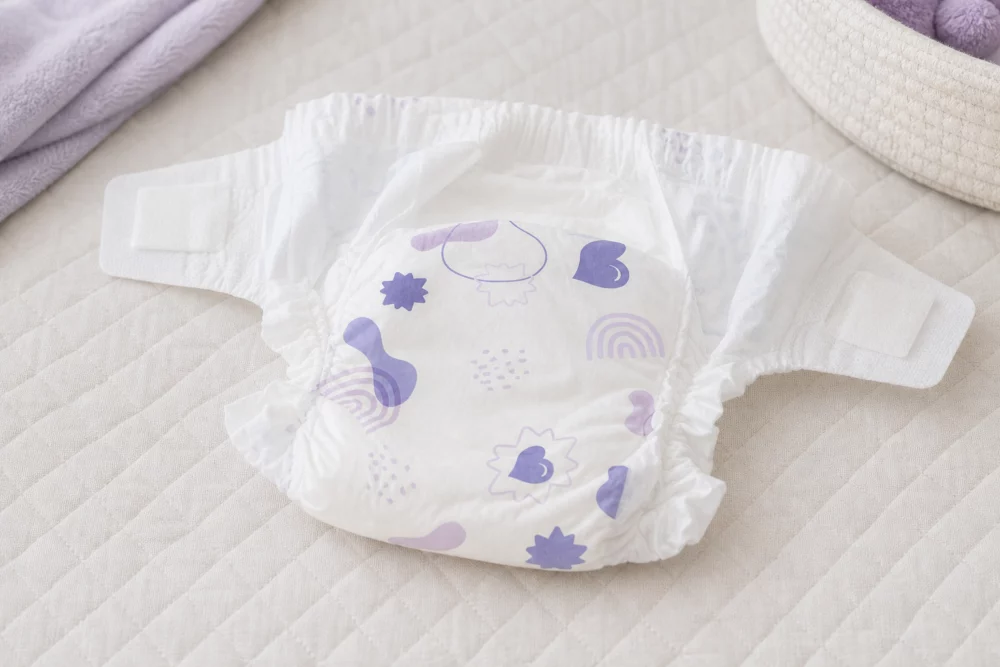
What should you do if you’re unsure?
Compare the information on the package with how the diaper fits your baby, and watch for recurring marks or leaks. One full diaper or a single leak doesn’t tell you much about whether the size is right. Notice whether the issue comes up during different diaper changes.
You can find our Baby’s Best Premium Diapers in Newborn, Mini, Midi, Maxi, and Junior sizes. If you’d like to put together regular diaper orders based on your needs, you can learn more about our diaper subscription. A subscription doesn’t change the need to choose a size that fits your baby right now.
A larger diaper isn’t a good solution if it gaps around the legs or slips often. If that happens, check the application and fit again. If you’re unsure about ongoing skin changes or discomfort, contact your pediatrician. Your midwife can also offer guidance.
Good to know
- Marks, tightness, and repeated leaks are clues, but they don’t confirm that a diaper is too small.
- Weight ranges can help you choose, but fit on your baby matters in everyday use. A well-fitting diaper fastens comfortably and doesn’t restrict your baby’s movement.
Please note: this article is no substitute for medical advice. If a rash persists, the skin is broken, or you are unsure, talk to your pediatrician.