


4 min read
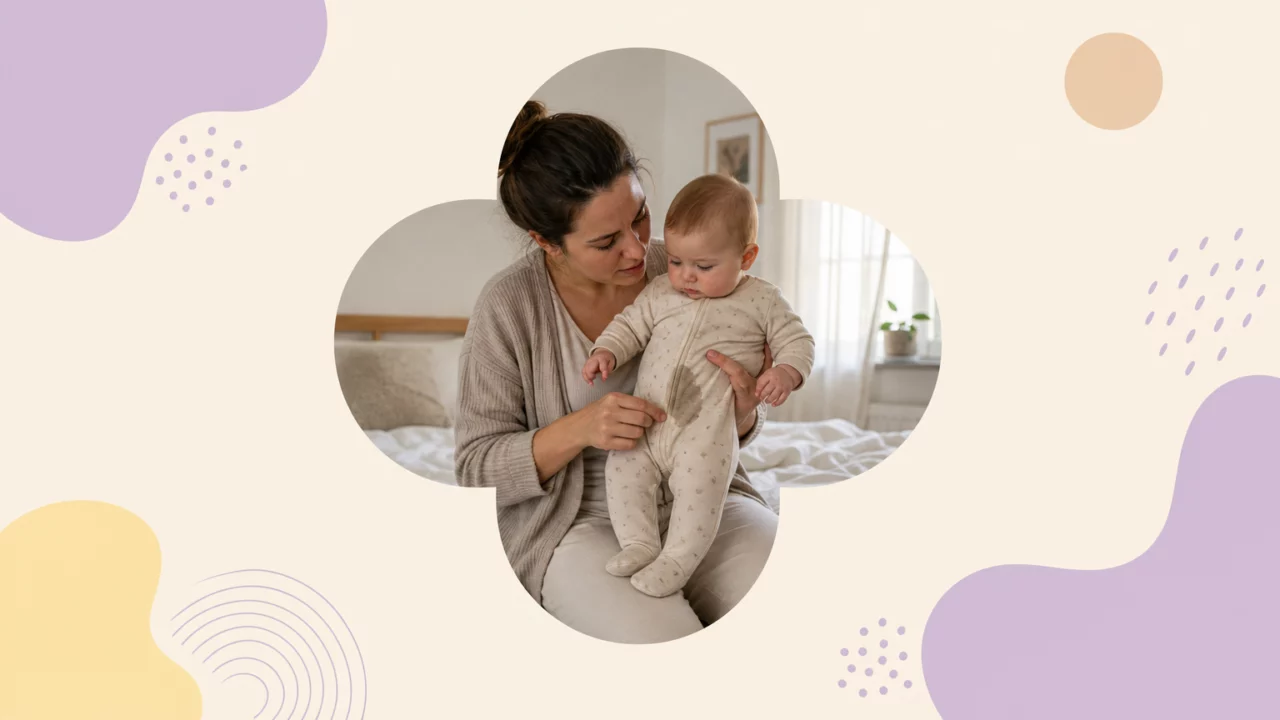
The diaper is fresh, but shortly afterward, your baby’s pajamas are wet. Diaper leaks can have several causes. The diaper may not fit properly, or a leg cuff may be folded inward. Use these checks to figure out what might be going on.
- First, check the diaper’s fit and fasteners.
- Gently pull the leg cuffs outward.
- Think about how long the diaper has been on and what your baby is about to do.
- One leak does not automatically mean the diaper is too small.
Why is your baby’s diaper leaking?
Liquid can escape around the legs or back if the diaper does not fit snugly or shifts when your baby moves. Leg cuffs folded inward can also be a factor. Sometimes the diaper fits well, but your baby has worn it through a situation when an earlier change would have made sense.
Notice where your baby’s clothes are wet and how the diaper was put on. If it leaks from the same spot repeatedly, you have a specific place to check next time.
How do you check the fit and leg cuffs?
Does the diaper fit your baby’s body?
When putting on the diaper, check that it covers the diaper area well and that the fasteners close comfortably. The waistband and leg openings should fit snugly without the diaper shifting. If the diaper is crooked or the front is positioned differently from the back, adjust it before fastening.
After diapering, check that the diaper stays in place when your baby moves. Deep marks or a tight fit may indicate that the size is not right. Find more tips in our article on checking diaper size and fit.
Are the leg cuffs pulled outward?
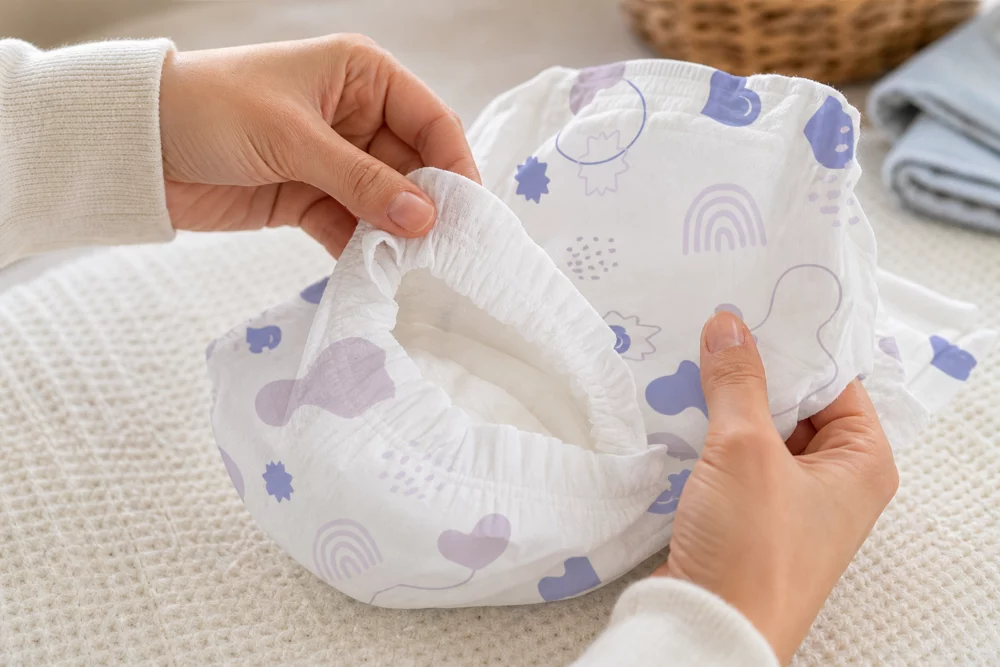
After fastening the diaper, run a finger along the leg openings and gently pull the cuffs outward. If a cuff is folded inward, liquid can escape more easily at that spot. Also check that no clothing is caught between the diaper and your baby’s leg.
This quick check is easy to do right after diapering. It can be especially helpful if the wetness is mostly around one leg opening.


Is the timing of the diaper change right for the situation?
A diaper can become more full after being worn for a longer time. Think about when you last changed it and whether your baby’s routine has changed. If the diaper is already quite full, changing it before a longer rest may work better.
A fixed schedule does not suit every baby or every day. Notice how often your baby pees or poops and when you usually need to change the diaper. Read more in our guide, How often should you change a diaper?
Does a leak always mean you need a larger size?
No. First, check that the diaper fits properly and that the cuffs are pulled outward. Also consider how long it has been on. If the diaper leaks repeatedly and also feels tight, is hard to fasten, or no longer covers the diaper area well, a different size may fit better.
The weight ranges on the package can help guide you. How the diaper fits your baby’s body matters too. A larger diaper will not work if it fits loosely or shifts when your baby moves. If you want to compare different sizes and fits, see our diaper overview.
What can you observe after a leak?
Remember where your baby’s clothes got wet and whether the cuffs were pulled outward. Also note how long the diaper had been on. This can help you change one specific thing at the next diaper change instead of adjusting several things at once.
If leaks keep happening despite careful diapering, check the fit again. One wet spot on its own does not tell you for sure what caused it.